
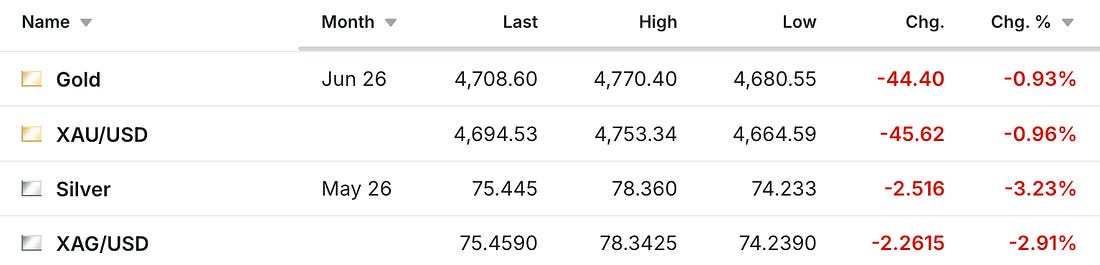
The gold and silver prices were both down this past Thursday, as it seems like Wall Street’s finally starting to realize that we might not really be close to a resolution with the Strait of Hormuz, and, of course, also the war.
The gold futures are down $44 to $4,708, and the silver futures are down $2.51 to $75.44, while crude oil is up $4 on the day to $97.
For another day, the Strait of Hormuz remains very closed. And in the past few hours, we got perhaps one of the clearest indicators yet of why this situation is very unlikely to be resolved any time soon. This, of course, has profound effects on the global economy, and the resulting paths for the next leg of the precious metals markets.
As I’ve tried to suggest as delicately as possible over the past two months, because I fully appreciate that there’s a lot of sensitivity and emotion around this issue, as I’ve continued to research the dynamics of the situation, the big problem I found with a resolution was that, while I do believe Trump would love an off-ramp, and that Iran would be happy to end this as well, it’s never seemed like Israel has any desire to do so. Netanyahu has made that clear, their violation of the ceasefire made that even more clear, and now this statement below from the Israeli Defense Minister makes it even more clear than that, if such a thing is possible.
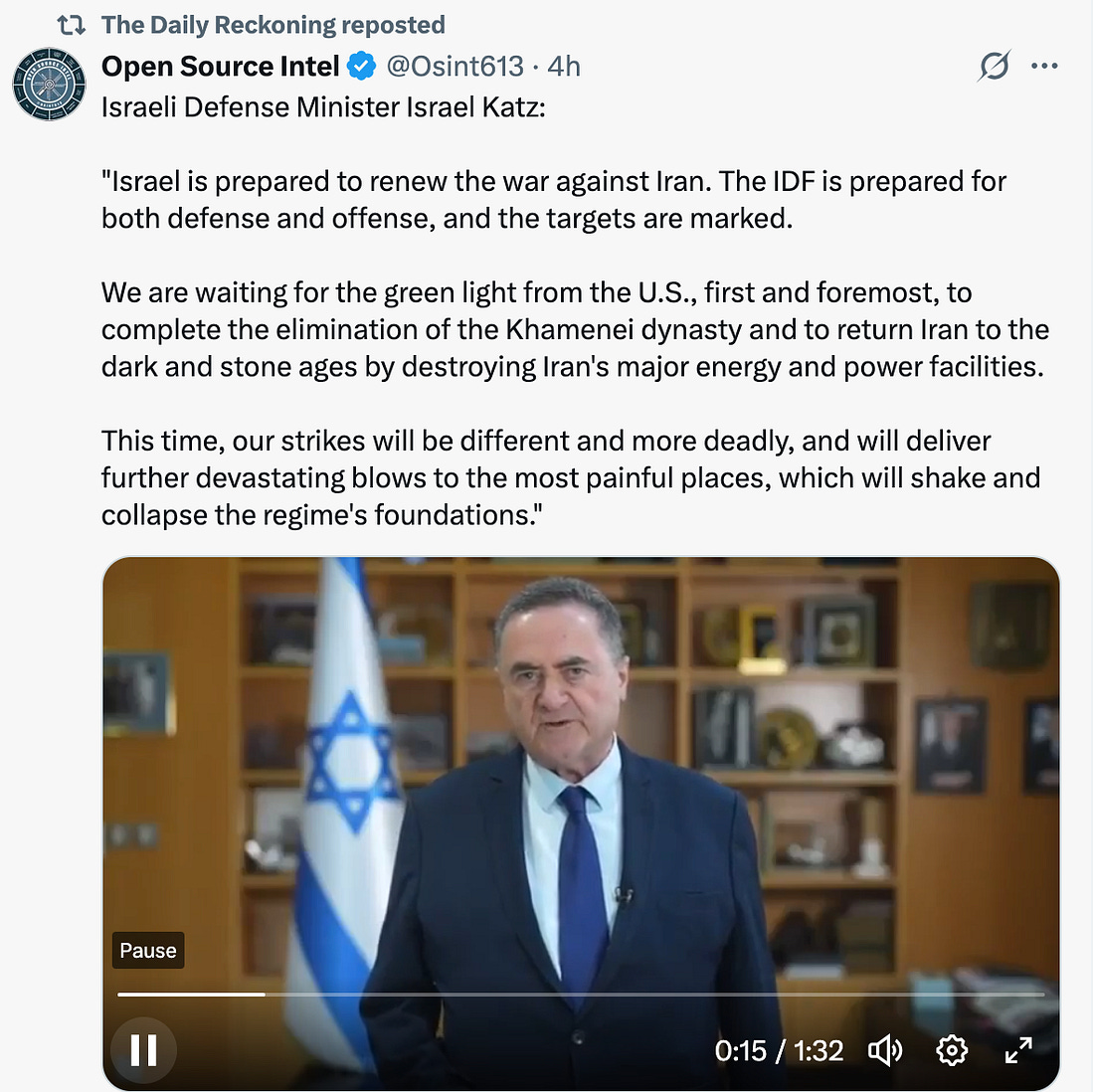
I’ll leave aside my own personal opinions on the statement, but will say objectively that a change in that stance is essentially asking for a change in decades of war and intense emotion. I suppose it could happen, and I certainly wish that it would, but I wouldn’t bet on it.
I’ve continued to document both here in the column and on my daily YouTube show how the damage from the closure of the strait continues to pile up at a nonlinear rate (for more on that, here’s the YouTube broadcast where I discussed this further).
As a result, we’ve come to a rather binary period in the world.
Either there’s a resolution, which has its own path of outcomes, that already weren’t so ideal from a global balance sheet perspective even before all this began, or the strait remains closed and the crisis gets accelerated, with significant damage already done, and further damage again piling up at an accelerating nonlinear rate.
Neither outcome is good, although the second one inflicts a lot more economic pain a lot faster. And based on one of the involved parties stating as clearly as it could possibly be stated that they have no intention of letting this end, that gives you a pretty good idea of how this is likely to go.
If you’re interested in understanding the thinking inside Iran better, which doesn’t necessarily mean you have to agree, here’s a recent interview from Iranian professor Mohammad Marandi.
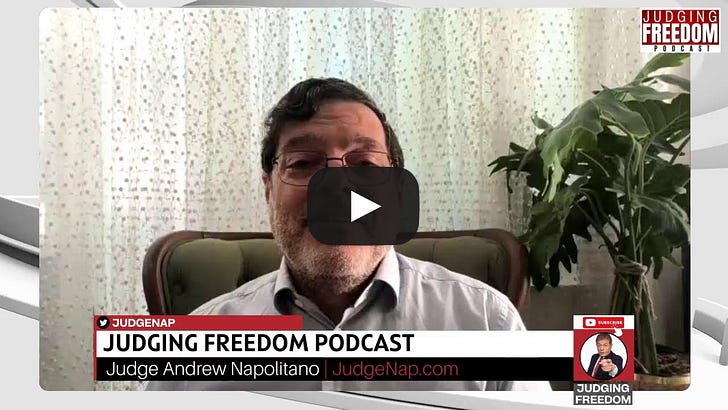
What he says here is consistent with what I’ve been hearing, reading, and seeing over the past eight weeks from a variety of credible sources. So I do think what he is saying here is in line with the broader thinking within Iran.
Given all of the above, it seems like there’s a very good chance of a further increase in the oil price, especially in countries that are actually paying international pricing (which is often divergent from what we’re seeing in US-based oil futures), which could mean more near-term downside for gold and silver.
Yet at the same time, if the situation does indeed take this path, I think the prices of gold and silver two years from now will end up being higher than they otherwise would have had none of this ever happened.
That may not be the best outcome for the world. But at least in terms of the precious metals, hopefully that puts into perspective what we’re looking at going forward.
Sincerely,
Chris Marcus
About the author